
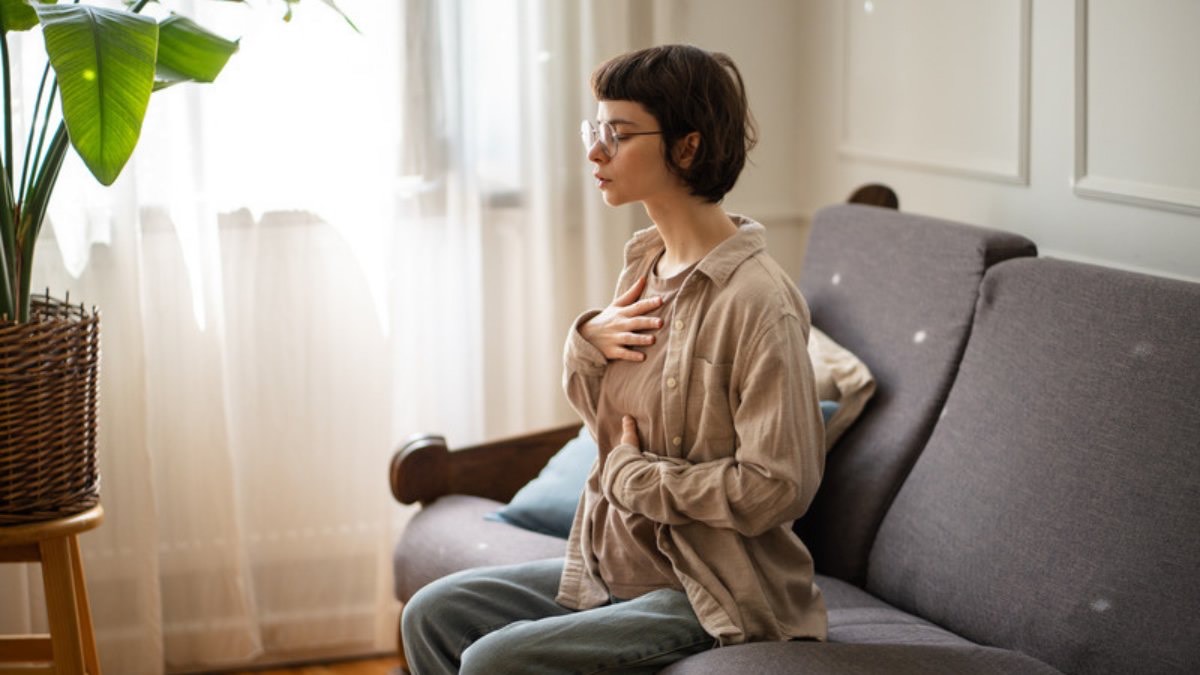
Panic attack vs anxiety attack: a panic attack is a sudden surge of intense fear that peaks within minutes, with strong physical symptoms such as a racing heart, breathlessness or dizziness. "Anxiety attack" is an everyday phrase rather than a clinical term. Some people use it to mean a panic attack; others, including Healthdirect, use it for anxiety that builds more slowly in response to stress or worry.
By Trevor Keen · Updated 24 November 2026
This guide starts with how clinicians define a panic attack, then compares the two side by side, covers what helps in the moment and explains when to get checked and when to see a psychologist. If you're in Adelaide, our anxiety psychologists see adults and young people at our clinics and by telehealth.
At a glance
| ✓ | A panic attack is an abrupt surge of intense fear or discomfort that peaks within minutes, with at least four physical or mental symptoms. |
| ✓ | "Anxiety attack" has no formal clinical definition. Some people use it for a panic attack, others for anxiety that builds up slowly because of stress. |
| ✓ | Any chest pain should be checked by a doctor. Call 000 straight away if it's severe, getting worse or lasts longer than 10 minutes. |
| ✓ | Slow breathing and focusing on something outside your body may help a panic attack pass. The symptoms are uncomfortable but not life threatening. |
| ✓ | Cognitive behaviour therapy (CBT) is a recommended first treatment in Australian guidelines, and Medicare rebates are available with a mental health treatment plan. |
In this guide
What is a panic attack?
The Royal Australian and New Zealand College of Psychiatrists (RANZCP) guideline, using the DSM-5 definition, describes a panic attack as an abrupt surge of intense fear or discomfort that reaches a peak within minutes, with or without an obvious trigger [1]. To count as a panic attack, at least four of these 13 symptoms are present [2]:
- a pounding or racing heart
- sweating
- trembling or shaking
- shortness of breath or a smothering feeling
- a feeling of choking
- chest pain or discomfort
- nausea or stomach upset
- feeling dizzy, unsteady, light-headed or faint
- chills or hot flushes
- numbness or tingling
- feeling unreal or detached from yourself
- fear of losing control or "going crazy"
- fear of dying
Having one panic attack doesn't mean you have panic disorder [3]. Panic disorder is when panic attacks keep happening unexpectedly and you stay worried about having another one, or change what you do to avoid them [1], for at least a month [2].
What is an anxiety attack?
"Anxiety attack" is an everyday phrase, not a term with a clinical definition, so people use it in different ways [5]. Healthdirect describes an anxiety attack as something that happens because of stress and usually builds up slowly [3]. Better Health Channel, on the other hand, says a panic attack can also be called an anxiety attack [4].
So some people say "anxiety attack" when they mean a panic attack. If what you're describing came on suddenly and peaked within minutes, it was probably a panic attack. If it built over hours, alongside a worry such as a deadline or a hard conversation, it's more likely the slower build of anxiety.
Panic or worry getting in the way?
Our psychologists work with panic and anxiety at our Salisbury and Seacliff clinics and by telehealth. Send an enquiry and we usually reply within 1 to 2 business days.
Book or referCall 08 8166 4700Panic attack vs anxiety attack: how can you tell?
Panic attack and anxiety attack side by side
| Panic attack | "Anxiety attack" | |
|---|---|---|
| Clinical definition? | Yes, in the DSM-5-TR and Australian guidelines | No, an everyday phrase |
| How it starts | Suddenly, sometimes with no clear trigger | Usually builds up slowly, linked to stress |
| Intensity | Very intense, peaks within minutes | Usually less intense, but can still feel very hard |
| How long it lasts | Usually minutes, up to about half an hour | Builds up and eases more gradually |
| Main feelings | Terror, strong body symptoms, fear of dying or losing control | Worry, restlessness, tension, feeling on edge |
Both are real and both deserve support. The difference matters mostly because it helps you and your GP or psychologist work out what's going on and what's likely to help.
What helps during a panic attack?
A panic attack feels frightening, but Better Health Channel describes the symptoms as uncomfortable, not life threatening [4]. Healthdirect says panic attacks usually last a few minutes [3], and Beyond Blue says up to half an hour, with the worst symptoms in the first 10 minutes [7]. Some things that may help in the moment:
| 1 |
Name it Remind yourself, "This is a panic attack. It's uncomfortable, but it will pass" [4]. |
| 2 |
Slow your breathing Healthdirect suggests breathing exercises during an attack to calm your symptoms [3]. Breathe in gently through your nose, then out slowly for a little longer. |
| 3 |
Focus outside your body Better Health Channel suggests focusing on something outside your own body, such as counting backwards in threes from 100 [4]. |
| 4 |
Let it pass If you sit and allow the symptoms to pass, you can build confidence in your ability to cope [4]. |
Safety first
Chest pain needs checking
Panic can cause chest pain, but so can heart problems. Healthdirect says any chest pain should be checked by a doctor right away, and to call 000 immediately if it's severe, getting worse or has lasted longer than 10 minutes [6]. Once a doctor has ruled out other causes, a psychologist can help with the panic.
When should you get help?
It's worth talking to your GP or a psychologist if panic attacks keep happening, you're avoiding places or activities in case one happens, or worry is affecting your sleep, work, study or relationships. See a GP first if you haven't had new physical symptoms checked.
Australian and New Zealand guidelines recommend cognitive behaviour therapy (CBT), medication, or both together as initial treatment options for panic disorder [1], and Beyond Blue lists CBT among the most effective treatments [7]. CBT helps you understand the panic cycle, change the thoughts that feed it and slowly face what you've been avoiding. Read more about CBT at CHSA.
With a mental health treatment plan, Medicare's Better Access program gives rebates for up to 10 individual sessions a calendar year [8]. Our guide to mental health care plans in SA explains how it works.
Common questions
Which is worse, a panic attack or an anxiety attack?
Neither is worse in a simple way. A panic attack is more intense but short, while anxiety that builds from stress is usually milder but can last longer, and both can make daily life hard.
How long does a panic attack last?
Usually a few minutes. Healthdirect says panic attacks usually last a few minutes, and Beyond Blue says up to half an hour, with the worst symptoms in the first 10 minutes.
Can you have a panic attack for no reason?
Yes. Panic attacks can happen without a clear trigger or danger, which is one reason they feel so frightening.
Is a panic attack dangerous?
The symptoms are uncomfortable but not life threatening. Chest pain should still be checked by a doctor, and if it's severe, getting worse or lasts longer than 10 minutes, call 000.
Talk to a psychologist about panic and anxiety
Book privately or with a mental health treatment plan from your GP. Fees are on our fees page, or call 08 8166 4700.
Book or referSee our feesRelated reading
- Anxiety psychology in Adelaide
- Cognitive behavioural therapy at CHSA
- Mental health care plans in SA: how they work
Prepared by
 |
Trevor Keen Founder, Conscious Healthcare SA · Physiotherapist (AHPRA PHY0002063374) · Master of Physiotherapy and Bachelor of Psychological Studies, Flinders University |
Trevor is a physiotherapist whose lived experience of disability led him to found CHSA, bringing psychology, assessments, occupational therapy, behaviour support and dietetics under one roof in Adelaide. He has completed a Bachelor of Psychological Studies at Flinders University, is now studying psychology at honours level, and helps write our guides alongside the clinicians who deliver each service.
Sources
- Andrews G et al. (2018). Royal Australian and New Zealand College of Psychiatrists clinical practice guidelines for the treatment of panic disorder, social anxiety disorder and generalised anxiety disorder
- MSD Manual Professional Version: Panic attacks and panic disorder
- Healthdirect: Panic attacks and panic disorder
- Better Health Channel: Panic attack
- Cleveland Clinic: Panic attack vs anxiety attack
- Healthdirect: Chest pain
- Beyond Blue: Panic disorder
- Department of Health, Disability and Ageing: Better Access initiative
If you are in crisis or thinking about harming yourself, call 000 or Lifeline on 13 11 14.
This guide is general information, not advice about your situation. Speak with your GP or one of our team about what's right for you.
SUBMIT YOUR COMMENT